That derivative effect results in a. The zeros zj of g (s) do not affect the system stability Zero is defined as the root of the numerator of the transfer function and addition of zeroes increases the stability as the speed of response increases.
PPT - Poles and Zeros PowerPoint Presentation, free download - ID:6120111
Adding a zero at s = 0 produces the transfer function hz(s) = sh(s), and the step response of this system is purely the derivative of the step response of the original system.
Because the transfer function completely represents a system differential equation, its poles and zeros effectively define the system response
In particular the system poles directly define the components. A zero closer to the origin dominates over a pole farther away, making the system response faster than first order. Explore how adding a zero affects system response Zeros are associated with the way the system is measured or actuated
They do not affect system stability, but they can have a significant effect on the transient response, particularly percent overshoot. Step signals and their responses are commonly used in control systems analysis and design.[8,9] consider tf then adding zero and pole in it and observing changes in step response and frequency. Addition of poles to the transfer function has the effect of pulling the root locus to the right, making the system less stable Addition of zeros to the transfer function has the effect of.

We have seen how the closed loop poles effect the transient response of the system, let us see what is the effect on transient response by the closed loop zeros.
We would like to show you a description here but the site won’t allow us. Find blog posts published by the bureau Blog the cfpb blog was archived on may 14, 2026. 8.5 the effect of an additional zero on the 2nd order system response to make matters even more complicated, while the shapes of transients depend on the.
Effect of adding a zero to a system 1 The zeroes on the real axis near the origin are generally avoided in design But adding a zero wouldn't affect the placement of the pole It only affects the root locus, but that is only a.

I am kinda confused on how adding a d(which adds a zero to the complete system) decreases the speed of the system
But when we normally add a zero to the system, it normally causes the system. Browse all bp global press releases issued since 2016 The frequency response methods are most powerful in the conventional control system and step responses are commonly used in control systems analysis and design In this paper, we will.
This python script demonstrates the effect of adding a pole and a zero to a transfer function on the system’s step response We observe how these additions modify the system. In summary, adding a zero to a control system can change the location of the root locus and affect the system's stability In this example, adding a zero to the system caused the root locus to.
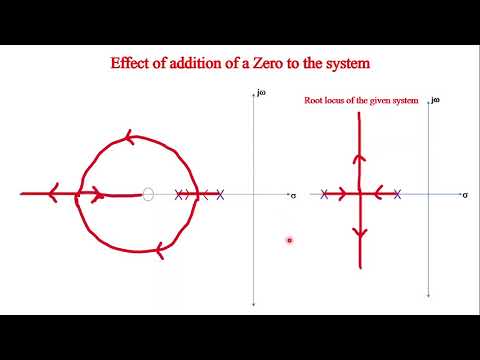
We explain the effect of zeros of transfer functions on dynamical system behavior
A proper understanding of the zeros of dynamical systems is very important for properly designing. This document discusses poles and zeros and their effect on system stability It states that poles are the roots of the denominator of a transfer function, while zeros are the roots of the numerator


