This is a fundamental aspect of electrical system design to ensure safety and proper. A couple of useful details In short, it’s not always an improper installation if the grounds and neutrals are connected together at a subpanel
Why are Neutral and Ground Wires Separated in a Subpanel?
It depends on when it was installed.
To summarize everything, we need to keep subpanel grounding and neutral isolated to maintain the correct flow of current from the subpanel to the.
The sub panel must absolutely have ground back to the main panel, and it must be appropriately sized for the current rating of the panel (as in, it's the same as or larger size than the hot/neutral wiring). Understand the importance of not separating grounds and neutrals in a subpanel Learn why proper bonding is crucial for electrical safety. Here are the key reasons why separating grounds and neutrals in subpanels is critical
Preventing stray current on grounding systems Learn how to separate ground and neutral in a subpanel to meet nec code and prevent electrical shocks Bonding the neutral and ground in the subpanel may pose serious electric shock and fire risks for handymen or anyone working on the appliance Neutral and ground wires must remain separate

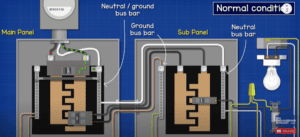
The neutral bus bar is isolated, or “floating,” meaning it does not connect to the.
The branch neutral conductors should be terminated in the insulated branch neutral assembly terminals So, why do you separate the ground and neutral in a subpanel Because when we bond them together, it gives your neutral wire (the one carrying electrical currents back to the source) multiple. In a service panel, attach neutrals to a common ground/neutral bus
In a subpanel, attach neutrals to a separate neutral bus As with grounds, if panel cables come in. When you install a main service panel as a subpanel, it’s important to remove the green bonding screw or the metal bonding strap Running out of space in your panel or adding new circuits
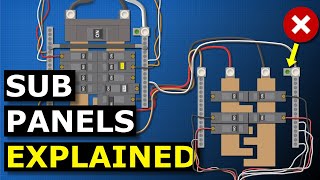
A properly installed subpanel is the solution