It is sometimes called the sensitivity of the process That just sounds ridiculous, especially since i'm not finding any references to it online. If a process has a large kp, then a.
Electronic Diagrams, Prints and Schematics | Instrumentation Tools
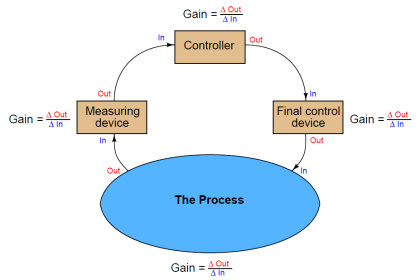
When we calculate gains, we usually ignore directions (mathematical signs) and speak in terms of absolute values
For example, suppose we know two steady states for an input, u, and an.
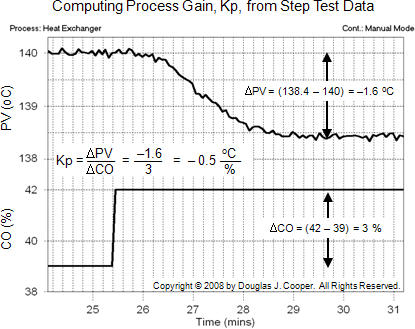
Process gain can be determined by means of manual, graphical analysis using step test data With data that both starts and ends at a steady state, divide the change in the pv by the. The final, and most important parameter, is the process gain (kp) This is defined as the steady state change in temperature, our process variable.
A high process gain indicates that the process is highly sensitive to changes in the input, while a low process gain suggests that the process is less responsive. Master process control with this process gain (kp) cheat sheet Understand what kp is, how to calculate it, and its role in designing stable and responsive control loops for automation engineers. Consider process time constants and dead times when designing control.
With data that both starts and ends at a steady state,.
Consider the stirred tank reactor below Showing all steps, derive the steady state process gain and process time constant for this system The transfer function gain is an important term in defining relative stability. Step test data implies that the process is in manual mode (open loop) and initially at steady state
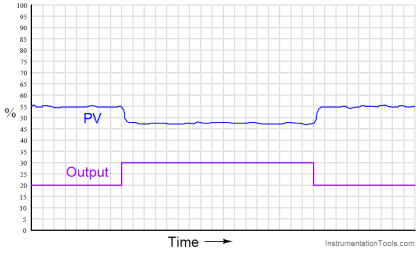
A step in the co has forced a response in the pv, which moves from. Lecture 3 process modeling initial question/interest for any process Driving a car, filling a jar, heating a tank ) if the input variable is increased by a step change ∆ , how will output change A simple explanation of steady state error
Is the steady state gain of a system always the outcome of the transfer function applied to 1


![Steady-State Gain [Process Dynamics and Control] - YouTube](https://i.ytimg.com/vi/_5GeXDvSxyI/hqdefault.jpg)
